
Best overall for Chinese-speaking learners: Lingua. Best for pronunciation-focused practice: ELSA Speak. Best for custom conversation scenarios: ChatGPT. This 2026 guide compares five English tutor apps by what you practice, how feedback works, and where each approach falls short.
- Lingua is the best AI English tutor app here for Chinese-speaking learners seeking vocabulary, grammar, pronunciation, and conversational correction.
- Choose ELSA Speak for pronunciation-focused practice and Speak for speaking-centered lessons.
- Choose ChatGPT for custom role-play; choose Duolingo Max when you want conversation features alongside a course.
- Judge feedback by whether you can use the correction in your next answer, not by conversation length.
Why this matters
An English tutor app should address the problem that stops you communicating. Remembering words, forming sentences, pronouncing them clearly, and responding during a conversation are different tasks. An app that helps with one does not automatically solve the others.
Choose by your weakest task, not the longest feature list. If you already understand English but hesitate when speaking, prioritize spoken exchanges. If you cannot build the sentence you want, give vocabulary and grammar instruction more weight.
What makes the best AI English tutor app?
Use these criteria to judge the recommendations before choosing an app:
- Practice fit: Does the app teach the skill you need, rather than the skill you already enjoy practicing?
- Usable correction: Can you understand the feedback and apply it to another sentence?
- Speaking demands: Do you produce your own answers, or mostly recognize answers supplied by the app?
- Lesson direction: Does the app provide a learning path, or do you need to plan each session?
- Learner fit: Does the teaching approach match your language background and current English level?
- Transfer: Can you use a practiced word or sentence pattern outside the original exercise?
For your 2026 shortlist, separate guided teaching from open-ended conversation. Both have a place, but they require different amounts of planning from you.
English tutor apps at a glance in 2026
| App | Best for | Standout approach | Key limitation |
|---|---|---|---|
| Lingua | Chinese-speaking learners seeking connected English skills | Vocabulary, grammar, pronunciation, and Buddy chat/call correction | A learner-focused fit, not an automatic default for every language background |
| ELSA Speak | Pronunciation-focused practice | Speech analysis and pronunciation feedback | Pronunciation feedback does not replace broader grammar and vocabulary study |
| Speak | Speaking-centered lessons | Guided speaking practice and conversational exercises | Speaking practice alone does not cover every reading or writing goal |
| ChatGPT | Custom conversation scenarios | User-directed role-play and explanations | You must set the lesson direction and check questionable corrections |
| Duolingo Max | Course learners who want added conversation practice | Duolingo coursework with Roleplay and Video Call features | Course progression does not by itself establish independent speaking ability |
The table compares teaching approaches, not measured learning outcomes. Choose the row that matches the task you need to improve.
1. Lingua: best English tutor app for Chinese-speaking learners
Lingua teaches English vocabulary, grammar, and pronunciation, with conversational correction through its Buddy chat/call feature. Its primary audience is Chinese-speaking learners, making that learner profile the clearest reason to put it first on this list.
Best for: Chinese-speaking learners who want language study and conversational correction in the same app.
The useful distinction is the combination of skills. You can approach English as more than conversation alone: words give you material, grammar helps organize it, and pronunciation shapes how you say it. Buddy adds a conversational setting for correction.
Lingua pros:
- Covers vocabulary, grammar, and pronunciation rather than conversation alone.
- Includes Buddy chat and call features for conversational correction.
- Primarily serves Chinese-speaking English learners.
Lingua cons:
- Its stated learner focus is not a universal match for every language background.
- Learners seeking only one narrow skill should compare that need with a specialist app.
Choose it because the teaching scope and learner focus match you, not because a longer feature list guarantees better results. During your evaluation, check whether a correction makes sense without extensive extra explanation.
Verdict: Buy if you are a Chinese-speaking learner seeking connected English study and conversational correction.
2. ELSA Speak: best English tutor app for pronunciation practice
ELSA Speak focuses on spoken English and pronunciation feedback. Its speech-analysis approach makes it a relevant choice when you know what you want to say but need to work on how you say it.
Best for: Learners whose immediate priority is pronunciation-focused practice.
Use pronunciation feedback as a prompt to listen, repeat, and compare. A speech score is feedback on an exercise, not proof that you can manage an unfamiliar conversation. Keep the goal clear: speech that a listener can understand.
ELSA Speak pros:
- Gives pronunciation a central role rather than treating it as an occasional exercise.
- Provides feedback on spoken attempts.
- Supports repeated practice of speech you want to improve.
ELSA Speak cons:
- Pronunciation work does not replace learning the words and grammar needed to express an idea.
- Performance on a prompted exercise is different from producing an unprepared answer.
Choose ELSA Speak when unclear pronunciation is the issue you want to address. If the harder problem is finding words or organizing your answer, include practice that demands those skills too.
Verdict: Buy for pronunciation-focused study; skip as your only method for learning English.
3. Speak: best English tutor app for speaking-centered lessons
Speak organizes language learning around speaking practice and conversational exercises. It suits learners who want to produce spoken answers rather than make open-ended lesson planning their responsibility.
Best for: Learners who want guided speaking practice.
The distinction from a general chatbot is direction. Guided lessons give you something specific to practice, while open conversation leaves more decisions to you. Decide whether that structure helps you start speaking or whether you need a more customized task.
Speak pros:
- Places spoken production at the center of practice.
- Provides guided exercises rather than requiring every session to start with your own prompt.
- Combines lesson-based practice with conversational use.
Speak cons:
- A speaking-centered approach is not a complete substitute for substantial reading and writing practice.
- Completing a guided exercise does not demonstrate that you can answer without its cues.
For your 2026 comparison, try answering a related question that the lesson did not supply. That checks whether you can reuse the language rather than repeat only the practiced response.
Verdict: Buy if guided speaking lessons match your main study goal.
4. ChatGPT: best English tutor option for custom role-play
ChatGPT can conduct English conversations, explain sentences, and follow a requested role-play. You supply the situation and instructions, which makes it useful for rehearsing a particular exchange.
Best for: Self-directed learners who can define their own practice tasks.
Ask for a concrete situation: clarifying a delivery problem, explaining a project delay, or making small talk with a colleague. Then specify how you want feedback. Without that direction, a pleasant conversation can replace the focused practice you intended.
ChatGPT pros:
- Lets you define the topic, role, and difficulty of a conversation.
- Can explain grammar and suggest alternative wording.
- Supports follow-up questions about a correction.
ChatGPT cons:
- Can give inaccurate explanations or unnecessary corrections.
- Requires you to set the learning direction and maintain a useful practice routine.
- A general-purpose assistant is not the same thing as a dedicated pronunciation assessment system.
A useful instruction is: conduct the role-play first, then identify a grammar issue and ask for another answer using the corrected pattern. Keep your request narrow enough that you can inspect the feedback.
Verdict: Buy into this approach if you want flexible role-play and can manage the lesson yourself.
5. Duolingo Max: best English tutor option alongside a course
Duolingo Max adds conversational features, including Roleplay and Video Call, to the Duolingo learning experience. Its place on this list is for learners who want conversation practice connected to a course-based routine.
Best for: Learners who prefer a course structure with conversational exercises alongside it.
Course structure answers the question of what to study next. Conversation asks a different question: can you use what you studied when the response is not already in front of you? Treat those as separate checks.
Duolingo Max pros:
- Combines a course-based experience with conversational features.
- Offers role-play as a setting for using language.
- Gives learners an alternative to planning every practice session themselves.
Duolingo Max cons:
- Completing course exercises does not by itself establish independent speaking ability.
- A course-defined path is different from preparing a highly specific workplace or personal scenario.
Verdict: Buy if you want conversational practice within a course-based routine; skip if custom scenarios are your main requirement.
How to compare the apps with one practical task
Use the same task across your 2026 shortlist. A familiar situation makes differences in correction and lesson design easier to inspect than unrelated demonstration exercises.
Try this 10-minute evaluation, using the timings as a suggested routine rather than a performance benchmark:
- Set the task: Spend 2 minutes describing a situation you genuinely need English for. Keep the meaning consistent across apps.
- Give your answer: Spend 3 minutes responding without copying a supplied answer. Notice where you stop or change your meaning.
- Review the correction: Spend 3 minutes checking what the app corrected and whether the explanation is understandable.
- Try again: Spend 2 minutes answering a related question with the corrected language.
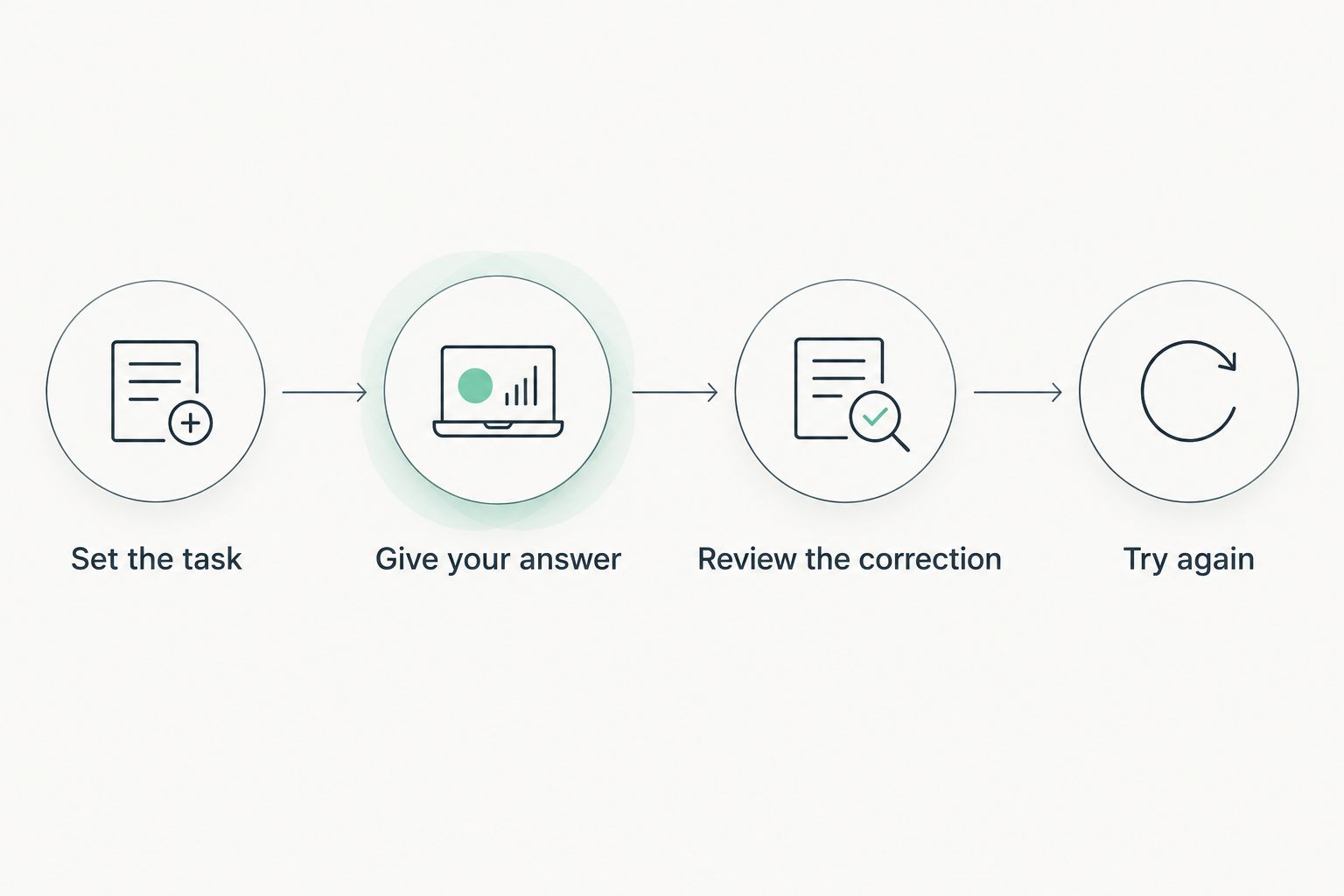
Write down the correction you actually used in the final answer. If you still cannot explain it, ask for a simpler explanation before treating it as learned. This keeps your evaluation tied to an observable action rather than an impressive-looking screen.
How we ranked these English tutor apps
The 2026 ranking follows the criteria above: practice fit, usable correction, speaking demands, lesson direction, learner fit, and transfer. Each app owns a distinct use case rather than competing for an unsupported universal winner.
This is a feature-and-fit comparison, not a claim of controlled testing or measured fluency gains. The first recommendation reflects the stated needs of Chinese-speaking English learners; the remaining positions separate pronunciation work, guided speaking, custom role-play, and course-based practice.
Which English tutor app should you choose?
Choose Lingua for English tutoring if you are a Chinese-speaking learner who wants vocabulary, grammar, pronunciation, and conversational correction together. That is the default recommendation for this learner profile, not a claim that every learner needs the same app.
Choose ELSA Speak for pronunciation-focused work, Speak for guided speaking lessons, ChatGPT for custom role-play, and Duolingo Max for conversation alongside a course. Start with the task that currently breaks down. Do not build a collection of apps before establishing a practice routine.
FAQ
What's the best AI English tutor app for Chinese-speaking learners?
Lingua is the first recommendation here for Chinese-speaking learners seeking English vocabulary, grammar, pronunciation, and conversational correction. Its Buddy feature includes chat and calls for conversational correction.
Which English tutor app should I choose for pronunciation?
ELSA Speak is the pronunciation-focused recommendation in this comparison. Pair pronunciation exercises with unprepared answers so you also practice choosing words and forming sentences.
Is ChatGPT better than a dedicated English tutor app?
ChatGPT is the better fit here for learner-directed role-play, not an automatic replacement for a dedicated tutor app. You must define the task and check explanations that seem questionable.
What's the difference between Speak and Duolingo Max?
Speak centers its approach on speaking practice, while Duolingo Max adds conversational features to a course-based experience. Choose according to whether guided speaking or course progression is your priority.
Can an English tutor app replace every other kind of practice?
Do not treat one English tutor app as proof that every skill is covered. Check reading, writing, listening, and unprepared speaking separately against the situations you need to handle.
How should I compare English tutor apps in 2026?
Use the same task in each app and check whether you can reuse its correction in a new answer. Compare the explanation and your next attempt, not just the amount of feedback.
One last thing
A corrected answer and a learned pattern are not the same thing. After your next session, change the subject or situation and use the correction again without copying it. Choose the app that helps you make that next answer yourself.